
JUMP TO :
JUMP TO :
Good Debt vs. Bad Debt - What’s the Difference?
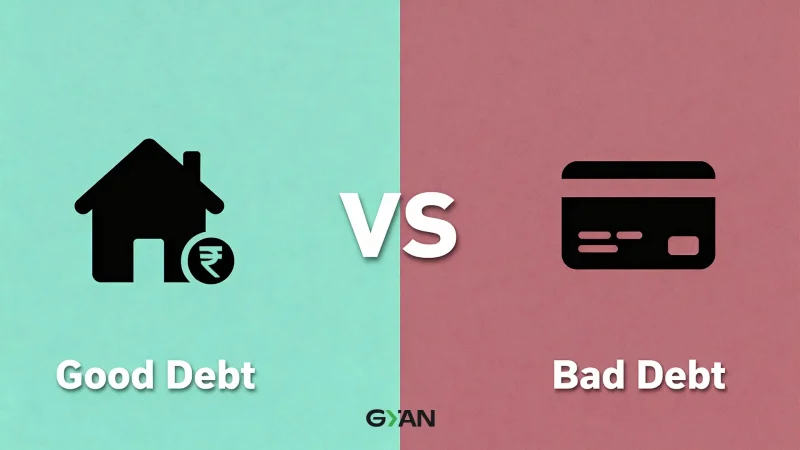
Debt is not something that people often think about, and as a result, they don’t have a clear understanding of what type of debt is best for their finances and future growth. There are two types of debt: Good Debt and Bad Debt. Good debt will help you increase your income and wealth, while bad debt will depreciate the value of assets and come with high interest rates. One will allow you to invest in educational programs, businesses, or real estate, and the other will negatively impact your finances by providing little or no return on your investment.
By understanding the difference between good debt vs bad debt, you’ll learn how to use your finances effectively and create an opportunity for building wealth over the long term.
What is Good Debt?
Good debt is the money borrowed by an individual or business for financial well-being and wealth generation. It is an investment rather than an expense and includes different forms of borrowing, such as student loans that will create future job opportunities, mortgage loans that will give an individual property ownership, and business loans that can provide adequate cash flow to generate income.
In general, good debt should have lower interest rates and significant potential for generating returns to increase the net worth. Although there are benefits associated with good debt, one must also plan their borrowing to avoid financial stress.
Examples of Good Debt
Good debt is one that leads to financial growth or has a positive effect on financial security in the long term.
– Educational Loan
This is a loan taken to fund studies that increase knowledge, skills, abilities, job opportunities, and income.
– Home Loan
Home loans are taken to buy a house or a property, the value of which appreciates, resulting in long-term wealth creation.
– Business Loan
These loans are taken by entrepreneurs for business purposes. It helps in creating income, assets, and financial freedom for those looking to start their business or expand an existing one.
Good debt, when used wisely, can deliver good returns, strengthen financial stability and provide future growth opportunities.
What is Bad Debt?
Bad debt refers to borrowing money for purchasing things that will lose their value quickly, or do not have long-term financial benefits. Bad debts are high-interest loans, making it very expensive to repay them. Common examples of bad debts are credit card debts, payday loans, and EMIs for non-essential goods.
Bad debts can lead to financial stress because they do not create any future income from the borrowed funds. As such, bad debt can damage your financial stability and inhibit your ability to save for the future, while increasing your exposure to financial risks. Hence, avoiding bad debts should be a key component in creating and maintaining a healthy and stress-free financial life.
Examples of Bad Debt
Bad debt refers to borrowing funds for things that do not grow in value or improve your financial position.
– Credit Card Debt
Caused by overspending on non-essential items that are subject to high-interest rates, which makes repayment challenging and expensive.
– Payday Loans
These are high-interest loans that keep borrowers in debt with no financial benefit in the long term.
– EMIs for Luxury or Depreciating Items
Some examples include home electronics, vacations, and luxury items that quickly lose value.
All these types of bad debt do not provide financial benefits and will impact your long-term financial security. When you have a clear understanding of good debt vs bad debt, you can effectively use your assets and your debt in strategic ways.
Key Differences Between Good Debt and Bad Debt
The real difference in good debt vs bad debt is whether the borrowed funds create a new asset or reduce your ability to make income. Take a look:
|
Aspect
|
Good Debt
|
Bad Debt
|
|---|---|---|
|
Purpose |
Used for growth based investments such as education, home, or business |
Spent on items that lose value, such as buying luxury goods |
|
Financial Impact |
Increases financial stability and builds long term wealth |
Causes financial stress and adds unnecessary debt repayment pressure |
|
Interest Rates |
Low interest rates |
Often high interest rates |
|
Value Over Time |
The value appreciates |
The value depreciates and offers no future benefit |
|
Examples |
Home loans, student loans, business loans, mortgage |
Credit card debt, payday loans, EMIs for vacation |
|
Outcome |
Increases net worth and future opportunities |
Does not increases net worth and future opportunities |
How the Rich Use Good Debt to Build Wealth
The rich use good debt as a strategic tool to acquire income-producing assets. They include real estate, businesses or stock that generate returns higher than the cost of borrowing. By leveraging debt, they pay less in taxes through deductions, amplify returns and allow net worth to grow faster than if they used their own cash.
Strategies for using good debt:
- ● Real estate leverage: Borrowing money to buy property that generates rental income, allowing the tenant to pay off the mortgage while the owner keeps the profit.
- ● Borrowing against assets: Instead of selling appreciating assets, the wealthy borrow against them to fund more investments or lifestyle expenses.
- ● Business Expansion: Utilising loans for business investments that create high-value revenue streams with tax-deductible interest costs.
- ● Margin Investing: Buying stocks using a margin account to increase potential gains, though this carries higher risk.
●Debt recycling: Converting non-deductible debt into deductible debt to increase wealth.
Signs You’re Stuck in Bad Debt
Below are the signs that indicate that you are stuck in huge bad debts:
- 1. Difficulty Making Payments
- You can only afford minimum payments on credit cards and/or loans each month.
- Monthly EMIs take up most of your income, leaving little money for other necessities.
- 2. Increased or Unmanageable Debt
- Your debt balance continues to grow each month, even after regular payments.
- You continue to get new loans or credit cards to pay off your older debts.
- 3. Financial Avoidance
- You avoid checking your bank statements and/or credit card bills out of fear or anxiety.
- You make payments later than you should and also pay late fees or penalties due to this.
- 4. Poor Credit Health
- Your credit score is decreasing, meaning you will have limited borrowing options in the future.
- It is becoming hard for you to obtain affordable loans.
- 5. Emotional and Lifestyle Impact
- Your money problems cause you to feel anxious, guilty, and keep you awake at night.
- You hide or are too embarrassed to talk about your debt with your family.
How to Avoid Bad Debt?
Following are the ways to manage a debt, take a look:
- 1. Create a monthly budget
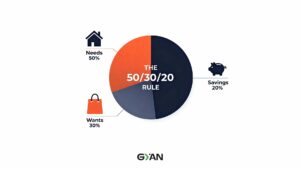
The 50/30/20 rule is an ideal starting point for tracking and planning your monthly budget, with 50% of income allocated to needs, 30% to wants and 20% to savings or debt repayment.
- 2. Avoid impulse buying
Wait until 24 hours before you plan to buy; this is the 24-hour rule. This will give you time to think and avoid unplanned purchases.
- 3. Use credit cards wisely
The problem with credit cards starts when you don’t pay the full bill on time. If you ever find that you can’t pay the full amount, take it as a warning sign that you might be spending more than you can afford.
- 4. Avoid EMIs for depreciating items.
Before opting for EMI when purchasing items, think long-term and decide whether the product will be useful even after paying off your EMI. If not, then start saving first.
- 5. Build an Emergency Fund
Set aside at least 3–6 months of living expenses in an easily accessible account. This safety net protects you from relying on high-interest credit cards during emergencies like medical expenses or job loss. - 6. Compare Interest Rates Before Borrowing
Always compare interest rates across banks, NBFCs and other lenders. Even a small difference of 2–3% can cost you a significant amount over time, especially on long-term loans.
- 7. Track your Credit Score
Check your credit score regularly every quarter and fix any errors to maintain a strong financial profile. Maintaining a credit score above 750 in India helps you qualify for better loan terms and lower interest rates.
Repayment ideas for getting out of debt
Getting out of debt can feel overwhelming, but the journey to financial freedom starts with a simple, actionable plan. By taking control of your spending, prioritizing loans and using targeted repayment strategies, you can break the cycle of high-interest payments.
Simple repayment plans to help you get started:
- ● Debt Avalanche Method
This method focuses on paying off the debt with the highest interest rate first. Once the highest-interest debt is cleared, you move to the next highest one. It helps you save the maximum money in the long run by eliminating the most expensive debt first.
- ● Snowball Method
In this method, you start by paying off the smallest debt first. After clearing one debt, you move on to the next-smallest. This approach gives quick wins and helps you stay motivated throughout the process.
- ● Debt Consolidation Method
This method involves combining all your debts into one single loan with a lower interest rate. This new loan is used to pay off all existing debts. After that, you only need to focus on one monthly instalment, making it easier to manage and track your finances.
Takeaways
To build a foundation of financial security, it is important to understand the difference between good debt and bad debt. Good debt will provide future returns and grow the value. Whereas a bad debt will drain your money and will not provide any return.
It is important to learn how to use debt effectively. When you borrow money with a purpose and use a repayment plan, debt can be a powerful tool for building wealth instead of being a burden. The key to achieving a balance between smart borrowing and excessive borrowing is by mastering both, creating wealth, avoiding financial stress, and making smart decisions for a stronger financial future.
Frequently Asked Questions (FAQs)
Good debt helps to increase the net worth and generate future income. Bad debt does not increase net worth or generate future income, and has a high interest rate.
The rich use debt to get richer by investing wisely. This helps to increase the asset value and wealth as the income from the investment pays off the debt and exceeds the cost of debt. Examples are investing in property or shares.
Bad debt is a debt taken for unnecessary expenses. An example of bad debt is credit card debt. It is a high-interest loan debt.
Good debt is a debt taken for something that increases in value or expands your income. An example of good debt is a home loan taken to buy a property that can appreciate in value.
Following are the ways to manage a debt, take a look:
- ● Create a Monthly Budget
- ● Avoid Impulse Buying
- ● Wise Use of Credit Cards
- ● Limit EMI Purchases
- ● Building Emergency Funds
- ● Compare Interest Rates
- ● Monitor Credit Score
- ● Paying off High-Interest Debt
- ● Seek Professional Advice
Good debt helps to increase the net worth and generate future income. Bad debt does not increase net worth or generate future income, and has a high interest rate.
The rich use debt to get richer by investing wisely. This helps to increase the asset value and wealth as the income from the investment pays off the debt and exceeds the cost of debt. Examples are investing in property or shares.
Bad debt is a debt taken for unnecessary expenses. An example of bad debt is credit card debt. It is a high-interest loan debt.
Good debt is a debt taken for something that increases in value or expands your income. An example of good debt is a home loan taken to buy a property that can appreciate in value.
Following are the ways to manage a debt, take a look:
- Create a Monthly Budget
- Avoid Impulse Buying
- Wise Use of Credit Cards
- Limit EMI Purchases
- Building Emergency Funds
- Compare Interest Rates
- Monitor Credit Score
- Paying off High-Interest Debt
- Seek Professional Advice
Recommended posts


Related Content





Millionaire Mind Intensive is about unlocking your financial freedom and strengthening your relationship with money.
Quick Links
Contact Info
Success Gyan India LLP
S5, Thiru Vi Ka Industrial Estate,
Guindy, Chennai – 600032